Taking Over as Principal Designer on a Higher-Risk Building: Gateway 2 and 3 Strategy for a Thames-Side Flat Refurbishment in Southwark
Re-establishing Compliance and Leading the Gateway Process for a Riverside HRB Apartment
The introduction of the Building Safety Act 2022 has fundamentally redefined how residential refurbishment projects are delivered within Higher-Risk Buildings (HRBs). What was previously a relatively fluid Building Control process is now a structured, evidence-led regulatory regime overseen by the Building Safety Regulator.
One of the most significant shifts has been the emergence of a new professional scenario: taking over the role of Principal Designer (Building Regulations) part way through a live project. This is no longer a simple continuation of design work — it is a strategic reset of the project’s compliance framework.
Folly Architects was appointed by the client to take over the Principal Designer role on a refurbishment project at Tudor Court in Southwark — a Thames-side apartment within a registered Higher-Risk Building. Our appointment required us to lead the Gateway 2 submission, re-coordinate the design team, review all existing technical information and carry the project through construction to Gateway 3 completion.
This project reinforces our growing body of work across London’s riverside residential buildings, where regulatory complexity, constrained construction environments and legacy design information require decisive architectural leadership. You can explore our wider regulatory expertise within the High-Risk Building Hub.
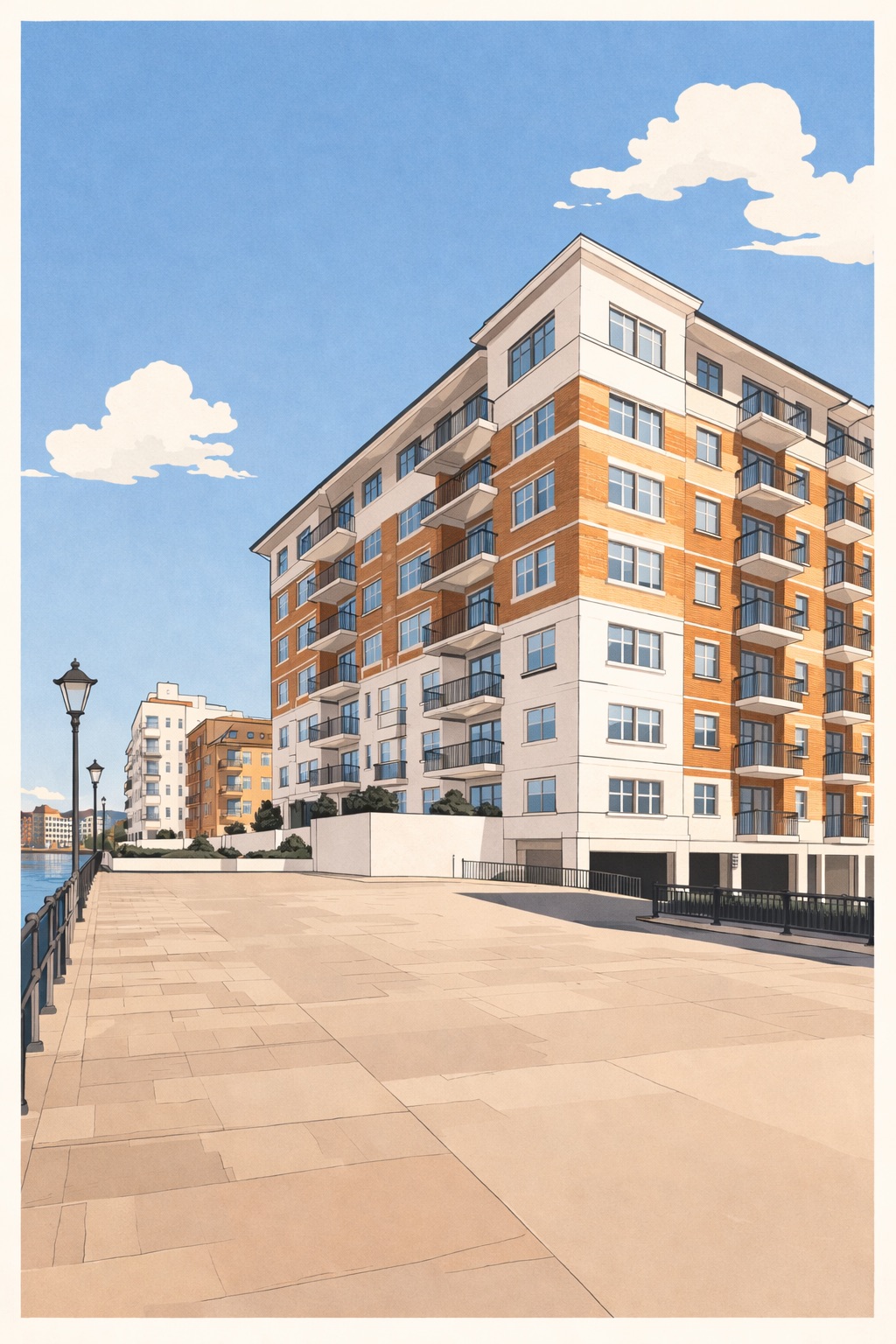
Southwark, Riverside Buildings and Higher-Risk Refurbishment
Southwark’s Thames-side residential buildings present a particularly complex environment for Higher-Risk Building work. These buildings often combine:
- Dense residential occupation
- Legacy fire strategies
- Complex structural arrangements
- Constrained access and logistics
- High-value internal refurbishments
In this context, even relatively contained apartment works must be approached with full regulatory rigour. Gateway 2 is not a procedural hurdle — it is a comprehensive demonstration that the proposed design complies with Building Regulations and integrates safely within the wider building.
This level of scrutiny is consistent across our HRB portfolio, including prime central London projects such as our Gateway 2 submission in Knightsbridge, where similar principles of coordination and compliance apply.
Principal Designer Handover: A New Regulatory Reality
Under the Building Safety Act, the Principal Designer role carries statutory responsibility for planning, managing and monitoring design work to ensure compliance with Building Regulations.
Where a project changes hands mid-process, the incoming architect must establish control of the design, verify compliance and assume full responsibility for the Gateway submission.
This is not a partial role. It requires:
- Full technical review of all existing information
- Verification of compliance with Approved Documents
- Re-coordination of the consultant team
- Strategic management of the Gateway submission
In effect, the project must be re-authored from a regulatory perspective.
This evolving role is explored further in our HRB guidance, which outlines how design responsibility is structured under the new regime.
Reviewing and Re-Coordinating the Design Information
Upon appointment, Folly Architects undertook a comprehensive review of all available design information. This included architectural layouts, fire engineering reports, structural proposals and partial MEP design.
The objective was not simply to assess design quality, but to determine whether the information was sufficiently coordinated and evidentially robust to support a Gateway 2 submission.
Where inconsistencies, gaps or ambiguities were identified, these were addressed through direct coordination with the consultant team. This process included:
- Aligning architectural layouts with fire strategy requirements
- Reviewing compartmentation and fire stopping logic
- Coordinating structural proposals with fire protection strategy
- Ensuring MEP systems were consistent with life safety requirements
In Higher-Risk Buildings, fragmented information is one of the primary causes of Gateway refusal. Our role was to eliminate that risk through structured coordination.
This type of technical interrogation forms a core part of our work documented in the Folly Files.
Re-Establishing the Gateway 2 Strategy
Gateway 2 represents a formal design freeze. The Building Safety Regulator must be satisfied that the proposed works comply fully with Building Regulations before construction can proceed.
For this project, Folly Architects established a clear submission strategy, ensuring that all design information was:
- Fully coordinated across disciplines
- Technically robust and evidence-based
- Clearly aligned with regulatory requirements
- Structured for efficient review by the Regulator
The submission included a complete set of coordinated drawings, schedules, specifications and statutory documentation, including the change control plan and mandatory occurrence reporting plan.
Our approach mirrors the methodology developed across multiple HRB submissions, including the Gateway 2 apartment project in Knightsbridge.
Leading and Inspecting the Consultant Team
A critical aspect of this appointment was leadership of the consultant team. As Principal Designer, Folly Architects did not simply coordinate information — we reviewed, challenged and verified it.
Each consultant’s output was inspected for:
- Technical accuracy
- Consistency with the overall design strategy
- Alignment with Building Regulations
- Clarity and evidential robustness
Where necessary, revisions were required prior to submission. This level of oversight is essential in HRB projects, where responsibility for compliance cannot be fragmented.
The Principal Designer must maintain control of design intent at all times.
Preparing the Fire & Emergency File
The Fire & Emergency File forms a key component of the Gateway submission and the building’s Golden Thread of information.
For this Thames-side project, the file required careful coordination between new design proposals and the building’s existing fire strategy.
The document was assembled using coordinated consultant information and structured to provide clarity for both the Regulator and the building’s responsible person.
Its role within the Gateway process is explored in detail in our Fire & Emergency File guidance.
Principal Designer Role During Construction
Following Gateway 2 approval, Folly Architects will retain the Principal Designer role throughout construction.
This includes:
- Monitoring works against the approved design
- Reviewing contractor proposals
- Managing compliance risk
- Administering statutory change control procedures
The change control process is a central mechanism within the Building Safety regime and ensures that any design changes are properly assessed and approved before implementation.
Further detail can be found in our Change Control guidance.
Frequently asked questions
The following questions and answers summarise common queries relating to this topic.
Gateway 3 and Final Compliance
Gateway 3 represents the final approval stage before occupation. The Building Safety Regulator must be satisfied that the works have been delivered in accordance with the approved Gateway 2 design.
Folly Architects will coordinate the final submission, including:
- As-built drawings
- Contractor compliance information
- Updated Fire & Emergency File
- Final declarations of compliance
This stage requires the same level of rigour as Gateway 2, ensuring that the completed works fully align with the approved design intent.
Why This Matters for Clients
Principal Designer handovers are becoming increasingly common as projects initiated before the Building Safety Act transition into the Gateway regime.
For clients, the appointment of an architect with direct HRB and Gateway experience can significantly reduce risk, avoid delays and ensure a structured path to approval.
This project demonstrates how a clear, leadership-led approach can successfully re-establish compliance and deliver a coordinated Gateway submission, even where design responsibility has changed mid-project.
Conclusion
Taking over as Principal Designer on a Higher-Risk Building requires more than design capability — it requires regulatory expertise, technical authority and decisive coordination.
At Tudor Court, Folly Architects has re-established the Gateway 2 strategy, aligned the consultant team and positioned the project for successful delivery through to Gateway 3.
As the Building Safety Act continues to reshape the industry, this ability to take control of complex projects and deliver compliant outcomes is becoming a defining architectural skill.
To discuss a Higher-Risk Building project or Principal Designer appointment, visit our services page or explore our regulatory guidance within the High-Risk Building Hub.
Contact us
If you would like to discuss a project, clarify regulatory requirements, or understand how our experience may be relevant to your work, you are welcome to get in touch.