Refurbishment within a High-Risk Building: Regulatory Strategy and Delivery
Advisory and technical support for complex residential refurbishment projects
Refurbishment projects within Higher-Risk Buildings (HRBs) often present a very different challenge to new-build development. While the physical scope of work may appear limited, the regulatory implications can be significant, particularly where works affect fire safety, structure, compartmentation or means of escape.
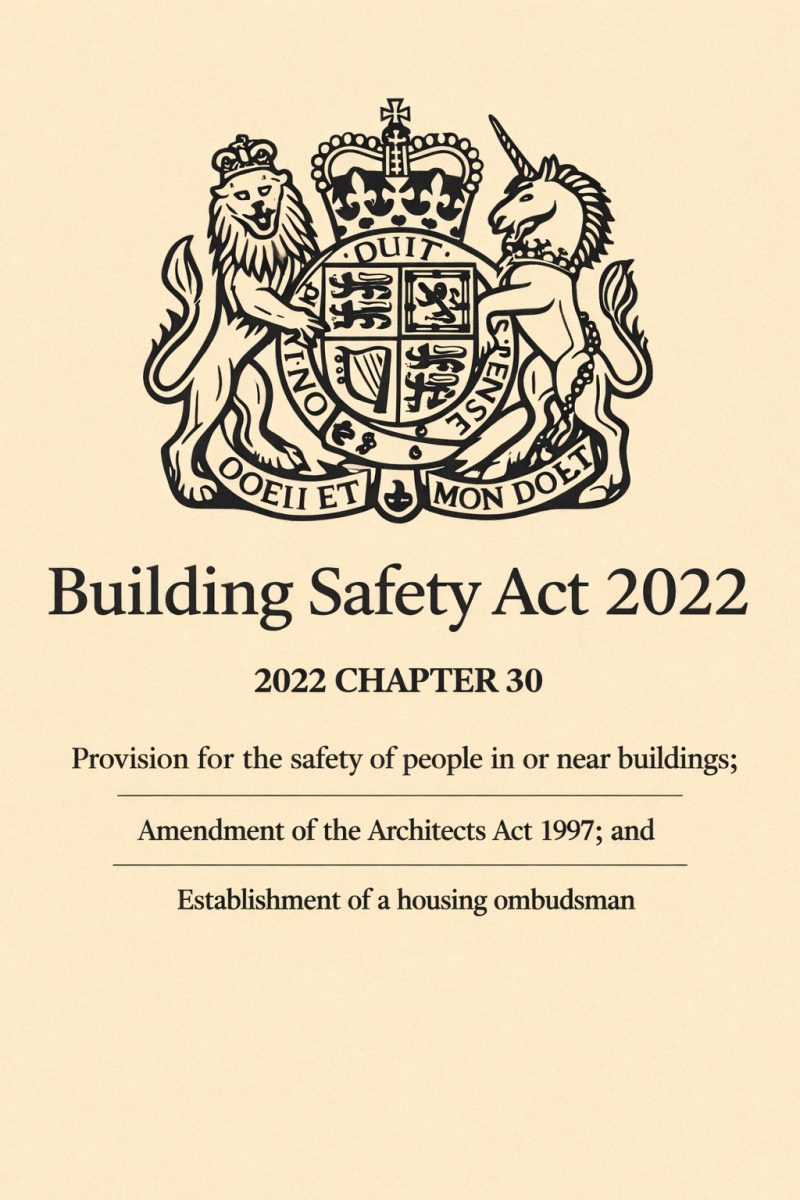
Under the Building Safety Act regime, refurbishment schemes within occupied residential buildings are subject to heightened scrutiny. Success depends not only on technical compliance, but on how clearly risk is identified, responsibilities are defined, and information is structured and explained to the Building Safety Regulator.
This article explores why refurbishment within an HRB requires a tailored regulatory strategy, how advisory and technical roles can operate in parallel, and how proportionate compliance can be achieved without over-scoping the project.
For a wider overview of the HRB framework, see our High Risk Building Hub , which brings together guidance across the Building Safety Act, Gateways and HRB delivery.

Refurbishment within the HRB regime: why context matters
Refurbishment projects within Higher-Risk Buildings typically involve existing structures, legacy fire strategies and incomplete records. Unlike new-build schemes, the design team is often working within constraints that limit available compliance routes and require careful justification of assumptions.
In many cases, the regulatory challenge lies less in introducing new risk and more in demonstrating that existing risk is understood, managed and not adversely affected by the proposed works. This requires a clear narrative explaining what is changing, what is not, and how safety is maintained throughout.
Early identification of HRB triggers is critical. Even relatively contained internal works can require Gateway approval where they affect regulated matters. This is why many clients seek early input through our Building Regulations Advisory Service before design positions are fixed.
Building Regulations Advisory Services within the HRB framework
On refurbishment projects, our role is often appointed as an independent advisory service, aligned with insurer requirements and distinct from the statutory Principal Designer role. This allows us to provide focused regulatory input while supporting the wider consultant team.
Advisory input typically covers regulatory strategy, identification of Gateway requirements, review of design information prepared by others, and support in structuring submissions to the Building Safety Regulator. Importantly, this role does not remove responsibility from statutory dutyholders—it strengthens the process through clarity and early risk identification.
This form of appointment is increasingly common on HRB refurbishments, particularly where the project team benefits from specialist input without altering contractual responsibility. It sits within our wider High Risk Building services .
Supporting Gateway 2 and Gateway 3 submissions
Where refurbishment works trigger the HRB Gateway process, the quality of the submission package becomes critical. Gateway 2, in particular, requires coordinated design information and a defensible compliance narrative before construction can begin.
Our support typically includes:
- Regulatory compliance checklists aligned with the Building Regulations
- Review and coordination of compliance evidence across disciplines
- Competence declarations and dutyholder documentation
- Change control procedures to manage design evolution
- Structured compliance narratives tailored to the specific building and scope
These documents are developed proportionately, reflecting the scale and risk profile of the refurbishment rather than applying generic templates. Practical guidance on Gateway submissions is explored further within our High Risk Building Hub .
Why refurbishment projects within HRBs require careful regulatory strategy
One of the most common risks on HRB refurbishment projects is treating regulatory requirements as a downstream issue. Where design decisions are made without a clear understanding of HRB expectations, late-stage redesign and approval delays are far more likely.
A considered regulatory strategy allows the design team to work within realistic constraints from the outset. This includes understanding which elements of the building are critical to life safety, how existing strategies operate, and what evidence will be required to demonstrate compliance.
This approach aligns closely with the intent of the Building Safety Act—embedding safety, accountability and competence early, rather than relying on retrospective justification.
Technical design input alongside advisory services
In some cases, advisory support is supplemented by targeted technical design input, particularly where drawings or details are required to demonstrate compliance for a defined scope of work.
Providing limited technical services alongside advisory input allows the project team to remain flexible while ensuring that critical information is robust, coordinated and aligned with Gateway expectations. This dual-track approach is increasingly common on HRB refurbishments where clients require both strategic clarity and practical technical output.
Where appropriate, this work is supported by our wider architectural services, including Design Management and CDM Regulations .
Clarifying responsibility within the HRB dutyholder framework
A recurring issue on HRB refurbishment projects is uncertainty around roles and responsibilities. The Building Safety Act introduces defined statutory dutyholders, and clarity around these roles is essential to avoiding regulatory challenge.
Advisory appointments do not replace statutory roles such as the Principal Designer (Building Regulations). Instead, they support those roles by strengthening compliance processes and information management. Where responsibility is blurred or misunderstood, projects are far more likely to encounter delay or enforcement action.
Further guidance on dutyholder roles is available within our HRB resources and FAQs.
Managing HRB risk without over-scoping the project
One of the key challenges on refurbishment projects is avoiding unnecessary escalation of scope. Not every HRB project requires wholesale intervention, but every project does require a proportionate response to regulatory risk.
Our approach focuses on identifying the specific regulatory pressure points relevant to the proposed works, rather than applying blanket solutions. This allows compliance to be addressed in a targeted and defensible manner, while maintaining momentum and avoiding unnecessary cost.
Demonstrating competence and process to the Building Safety Regulator
Under the HRB regime, regulatory approval is not based solely on technical outcomes. The Building Safety Regulator also reviews competence, process and accountability.
Clear documentation, structured change control and consistent narratives across submissions demonstrate that risk is being actively managed. This emphasis on process is a defining feature of HRB work and underpins successful Gateway approvals.
Further guidance and related HRB projects
You can explore further HRB guidance and project insight through the links below:
To discuss Building Regulations advisory or technical support on a refurbishment within a Higher-Risk Building, you can contact us at hello@follyarchitects.com.
Frequently asked questions
The following questions and answers summarise common queries relating to this topic.
Managing HRB risk without over-scoping the project
One of the key challenges on refurbishment projects is avoiding unnecessary escalation of scope. Not every HRB project requires wholesale intervention, but every project does require a proportionate response to regulatory risk.
Our approach focuses on identifying the specific regulatory pressure points relevant to the proposed works, rather than applying blanket solutions. This allows compliance to be addressed in a targeted and defensible manner, while maintaining momentum and avoiding unnecessary cost.
Demonstrating competence and process to the Building Safety Regulator
Under the HRB regime, regulatory approval is not based solely on technical outcomes. The Building Safety Regulator also reviews competence, process and accountability.
Clear documentation, structured change control and consistent narratives across submissions demonstrate that risk is being actively managed. This emphasis on process is a defining feature of HRB work and underpins successful Gateway approvals.
Further guidance and related HRB projects
You can explore further HRB guidance and project insight through the links below:
To discuss Building Regulations advisory or technical support on a refurbishment within a Higher-Risk Building, you can contact us at hello@follyarchitects.com.
Contact us
If you would like to discuss a project, clarify regulatory requirements, or understand how our experience may be relevant to your work, you are welcome to get in touch.