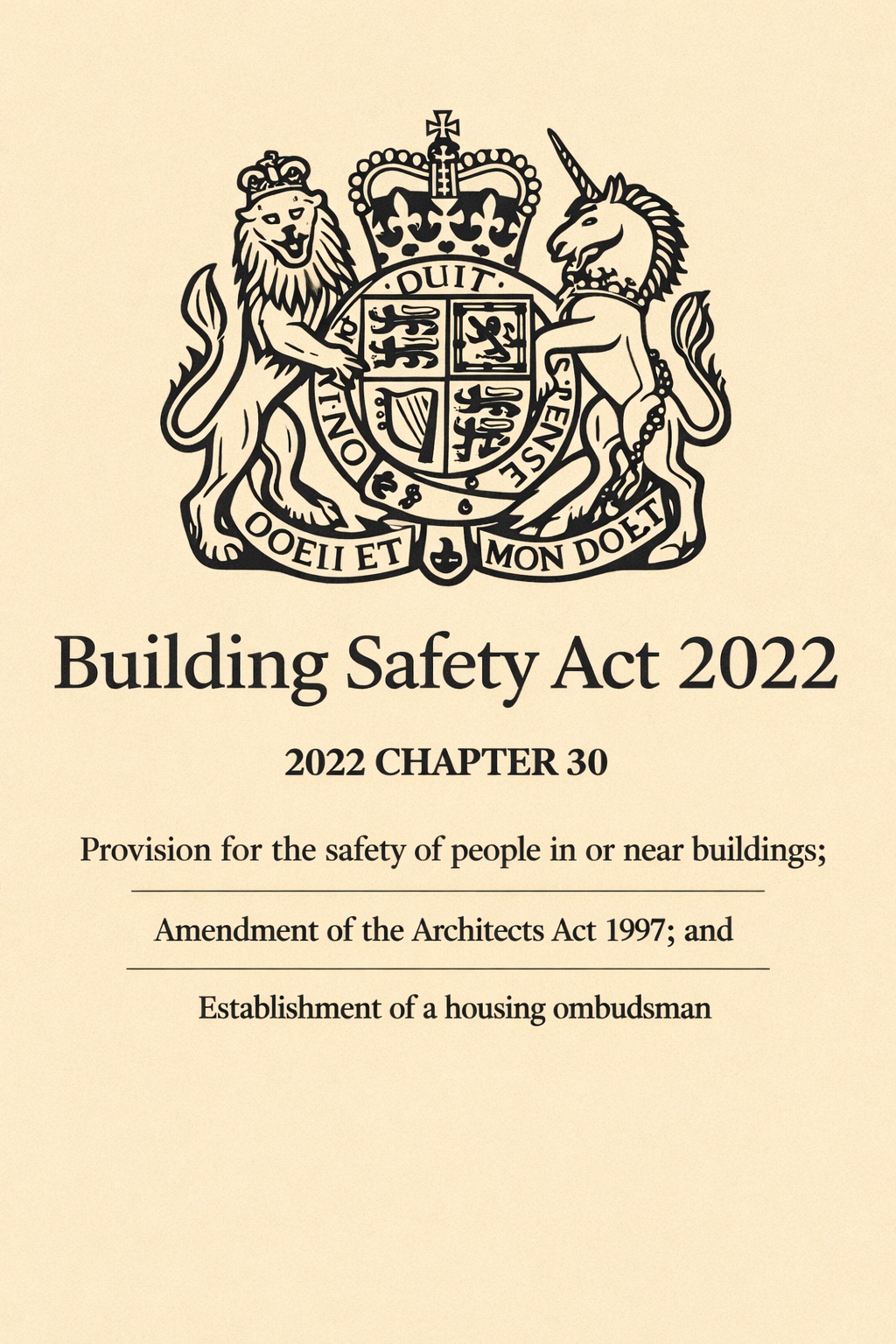
From Approved Inspector to Building Safety Regulator
Why Legacy Higher-Risk Building Projects Can Face Unexpected Regulatory Challenges
Many developers assume that if a project commenced before the introduction of the Higher-Risk Building regime, the new Building Safety Act requirements will have limited impact on delivery. In reality, circumstances can change significantly during construction, creating unexpected regulatory challenges that require careful management.
We were recently appointed to assist with a complex rooftop airspace development involving four new penthouse apartments constructed above an existing occupied residential building. While the scheme had progressed under the previous Building Control framework, a significant development altered the project's regulatory pathway when the appointed Approved Inspector ceased trading.
For developers operating within the Higher-Risk Building sector, understanding the relationship between the Building Safety Act, Building Control processes and regulatory oversight is increasingly important. Our High Risk Building Hub provides wider guidance on these evolving requirements, while our Building Safety Act Advisory Service supports clients navigating complex compliance challenges.
This project demonstrates how legacy developments can still find themselves under intense scrutiny from the statutory regulator and why a robust, evidence-based approach to Building Regulations compliance is essential. It also highlights the value of combining architectural expertise with regulatory understanding when preparing submissions for complex buildings, including through Building Regulations Advisory Services .

An Unusual Rooftop Extension Project
The project involves the construction of four penthouse apartments above an existing residential building exceeding 18 metres in height. The development forms part of an airspace extension strategy, allowing new homes to be delivered without requiring additional land.
While airspace developments have become increasingly common in urban areas, this project contains several unusual characteristics. The existing building remains occupied during construction, the structure dates from the 1990s, and the building itself is listed. Each of these factors introduces additional layers of complexity from both a design and regulatory perspective.
The scheme had already progressed substantially before the introduction of the Higher-Risk Building regime and therefore followed a different approval pathway from projects commencing today. However, regulatory history does not necessarily eliminate future compliance obligations, particularly when circumstances change during delivery.
When an Approved Inspector Ceases Trading
The turning point for the project occurred when the Approved Inspector responsible for Building Control oversight ceased trading.
In many projects, such an event can create significant uncertainty regarding Building Control responsibility, project records, compliance evidence and future approvals. For Higher-Risk Buildings, the implications can be even more significant because statutory Building Control responsibilities ultimately sit with the Building Safety Regulator.
As a result, the project required a comprehensive review before progressing through the appropriate statutory process. Years of design development, construction activity, consultant information and compliance records needed to be assessed and consolidated into a coherent regulatory submission.
This is not simply an administrative exercise. The regulator must be satisfied that the project complies with the Building Regulations despite the complexity of its delivery history and changing regulatory landscape.
Undertaking a Full Regulatory Review
Our appointment focuses on undertaking a detailed regulatory review of the project and preparing the Building Regulations submission required to support continued delivery.
This involves reviewing historical design information, assessing changes made during the project lifecycle, understanding the basis of previous approvals and identifying any areas requiring additional justification or supporting evidence.
Unlike a conventional Building Regulations application prepared at the outset of a project, this exercise requires a retrospective understanding of decisions made over several years by multiple parties. The challenge is not only demonstrating compliance but also clearly evidencing how compliance has been achieved.
For projects that may ultimately be reviewed by the Building Safety Regulator, the quality and organisation of information can be just as important as the technical content itself.
Why Architectural Expertise Matters
Projects of this nature are not typically led by architects alone. In many cases, they are approached primarily as technical compliance exercises involving Building Control specialists and fire consultants.
However, we believe there is considerable value in combining regulatory review with architectural understanding. At Folly Architects, our team regularly acts as Architect, Principal Designer and Building Regulations consultant across a range of complex projects, including Higher-Risk Buildings.
This broader perspective allows us to understand not only whether a design complies with regulatory requirements but also why particular design decisions were made, how consultants coordinated information, how construction sequencing influenced outcomes and how compliance evidence should be presented.
Our experience delivering projects through the design, regulatory and construction stages enables us to identify potential issues early and structure submissions in a way that supports efficient regulatory review.
For clients, this integrated approach can significantly reduce uncertainty when dealing with complex Building Regulations matters and evolving regulatory expectations.
Frequently asked questions
The following questions and answers summarise common queries relating to this topic.
Yes. While some projects may benefit from transitional arrangements, circumstances such as Building Control changes or regulatory intervention can result in Building Safety Regulator involvement and additional scrutiny.
The project may need to revert to the relevant statutory Building Control authority. For Higher-Risk Buildings, this may involve the Building Safety Regulator assuming responsibility for Building Control functions.
These projects often involve occupied buildings, structural alterations, fire safety considerations, multiple stakeholders and extensive coordination between design, construction and regulatory teams.
Architects with experience in design delivery, Principal Designer duties and Building Regulations can provide valuable insight into how design decisions were made and how compliance should be evidenced to regulators.
ty-critical information relating to the building and proposed works, assembled to support Building Safety compliance obligations.Maintaining comprehensive project records, clear design information, coordinated consultant documentation and robust compliance evidence can significantly improve preparedness for regulatory review.
Preparing Information for Building Safety Regulator Scrutiny
One of the most important aspects of the project is ensuring that the information presented can withstand detailed scrutiny from the Building Safety Regulator.
Higher-Risk Building oversight increasingly focuses on demonstrating competence, evidencing decision-making and providing a clear audit trail. Regulators need confidence that the project team understands how compliance has been achieved and can support those conclusions with appropriate evidence.
This is particularly important where projects have long delivery programmes, multiple stakeholders and historical approvals that span different regulatory frameworks.
Our role is therefore not simply to compile documentation. It is to undertake a structured review of the project, identify gaps where they exist, coordinate the necessary information and present a robust Building Regulations submission capable of supporting continued progress on site.
Lessons for Developers and Building Owners
This project highlights an important lesson for developers, asset owners and project teams operating in the Higher-Risk Building sector.
Even where a scheme commenced before the Building Safety Act framework was introduced, regulatory circumstances can change unexpectedly. The loss of an Approved Inspector, changes in project scope, evolving compliance expectations or intervention by statutory authorities can all require additional review and documentation.
Early preparation, comprehensive record keeping and clear compliance evidence are increasingly important for managing these risks. Developers should ensure that project information remains accessible, coordinated and capable of supporting future regulatory review.
Where complex buildings are involved, specialist support can help identify potential issues before they become programme-critical obstacles.
Supporting Complex Higher-Risk Building Projects
The transition from an Approved Inspector-led process to Building Safety Regulator oversight is not a situation most developers anticipate when commencing a project. However, as this case demonstrates, unusual circumstances can emerge even on well-established developments.
For complex projects involving Higher-Risk Buildings, listed structures, occupied residential buildings or airspace developments, a thorough understanding of both architectural design and regulatory compliance can be invaluable.
At Folly Architects, our experience across Principal Designer services , Building Regulations Advisory Services , Higher-Risk Building compliance and complex regulatory submissions allows us to support projects facing unusual challenges and heightened regulatory scrutiny.
Ultimately, the objective is not simply to demonstrate compliance. It is to provide regulators with confidence that the project has been thoroughly reviewed, appropriately evidenced and is capable of progressing safely and efficiently towards completion.
Contact us
If you would like to discuss a project, clarify regulatory requirements, or understand how our experience may be relevant to your work, you are welcome to get in touch.