Sea Rise City
A Floating Future for Rising Seas
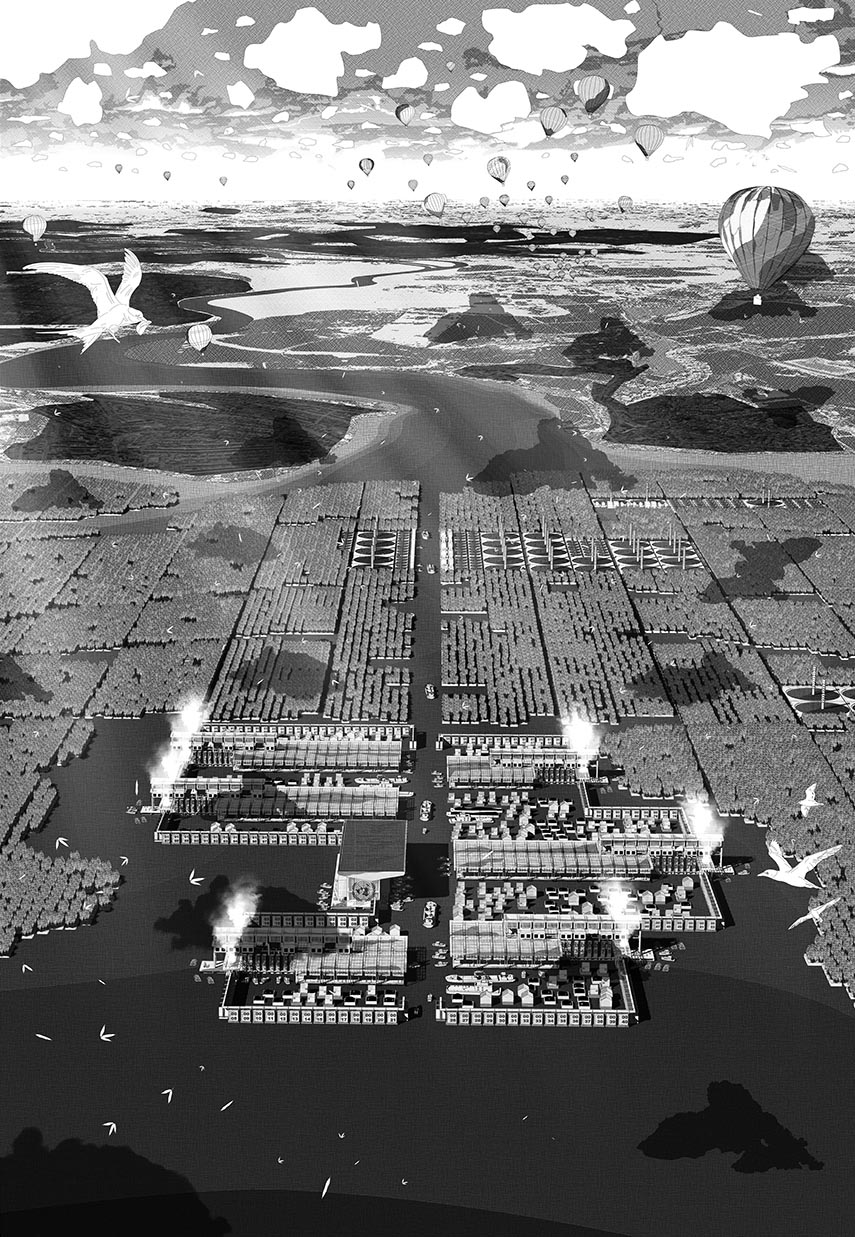
Sea Rise City was a past student project exploring how architecture might respond to one of the most urgent challenges of our time: climate change and rising sea levels. Rather than retreat from the water, the project asked: what if cities could adapt and grow with it?
Reimagining Bristol on Water
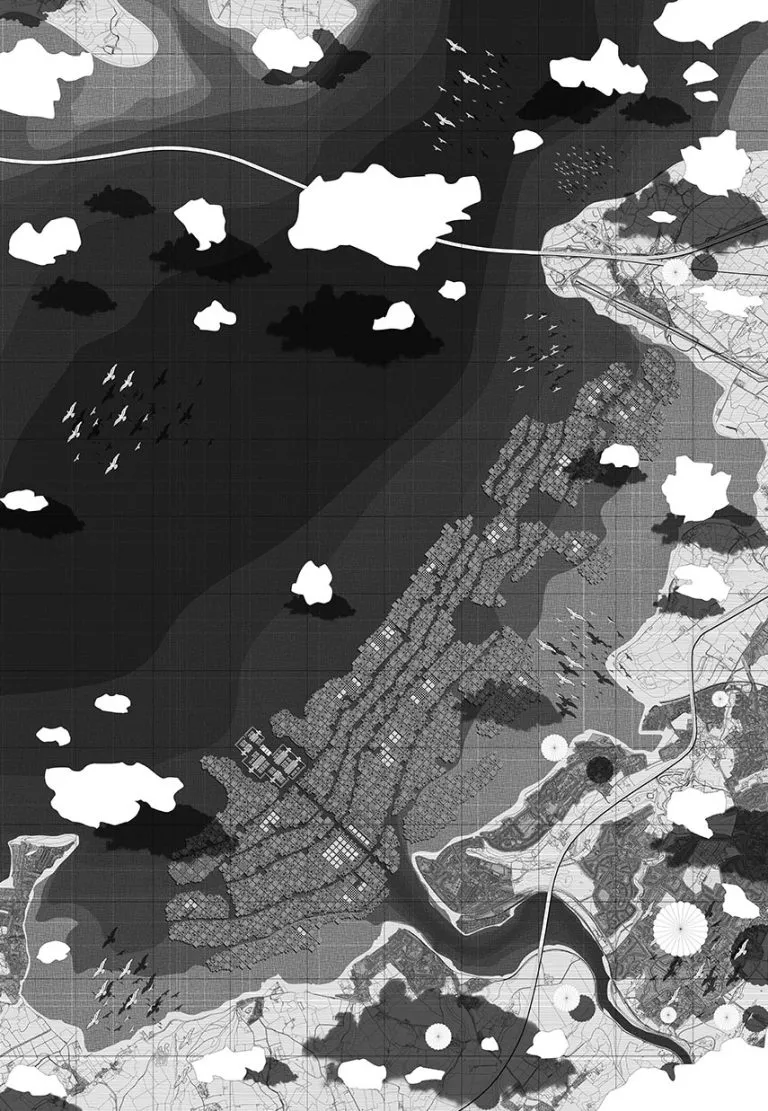
The design imagined Bristol in a future where land lost to flooding is replaced by floating neighbourhoods made from sustainable, low-carbon materials like bamboo. These buoyant platforms offered not just survival, but the potential for new communities, innovative construction methods, and a radical rethinking of what a “city” might mean when shaped by water.
-
- Sea Rise City 6
-
- Sea Rise City 5
A Circular and Sustainable System
-
- Sea Rise City 9
-
- Sea Rise City 3
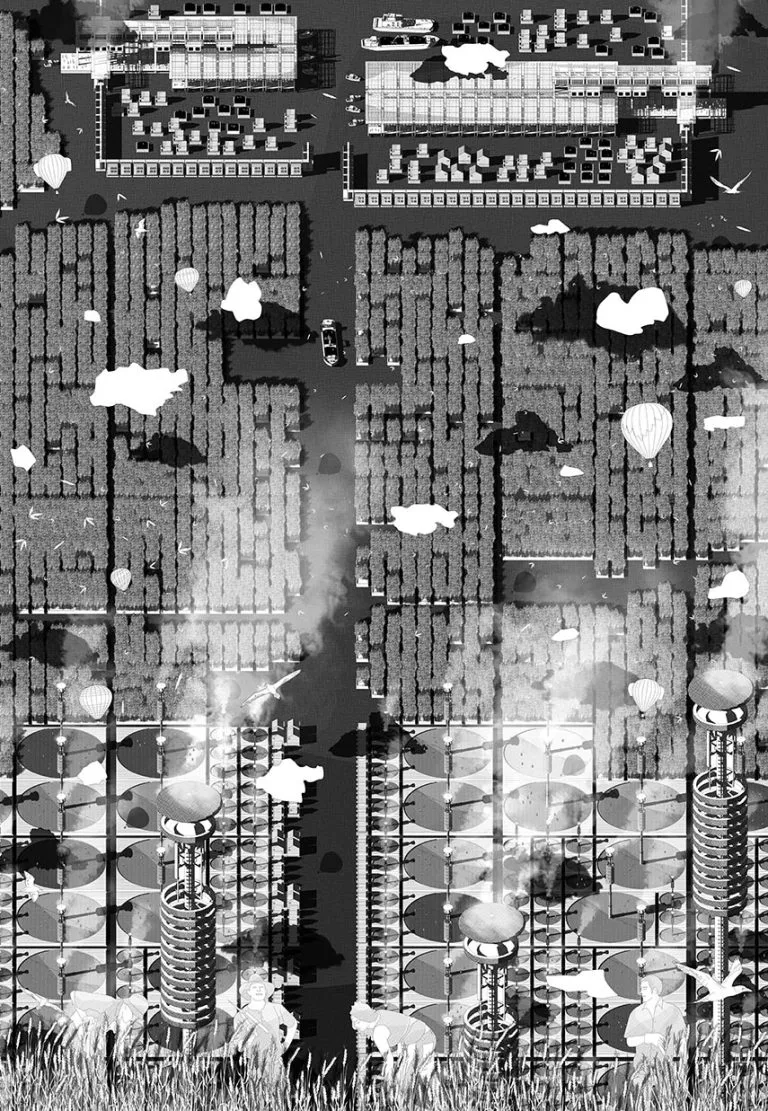
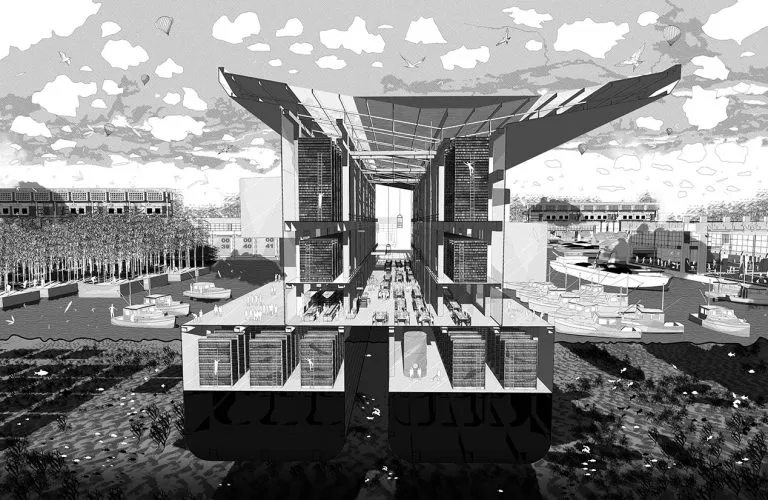
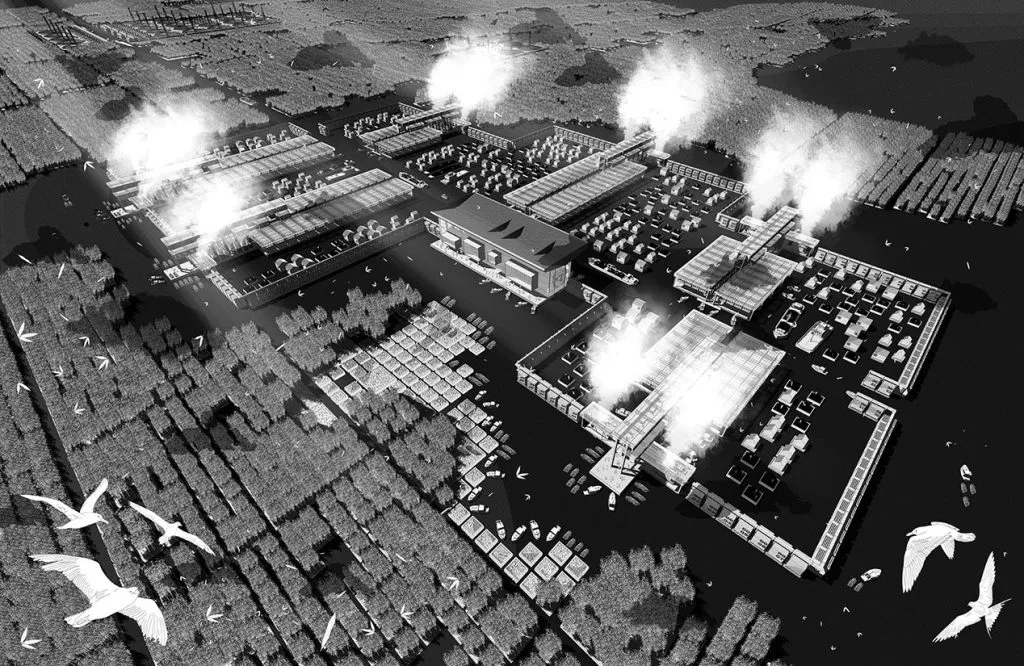
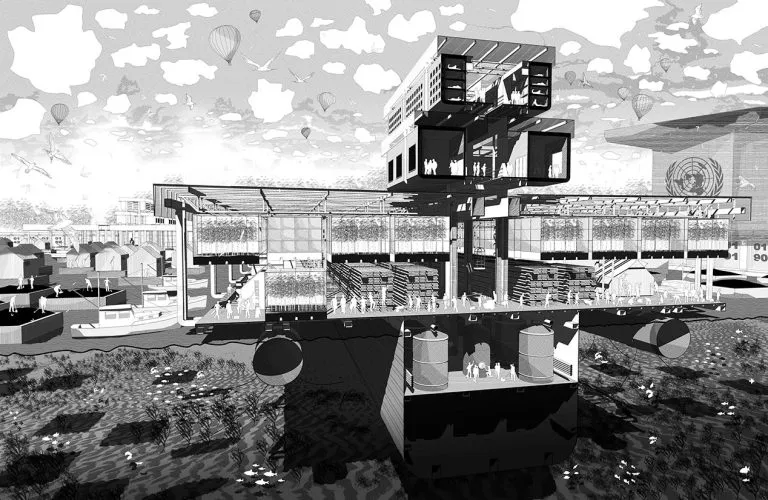
At the heart of the vision was a floating headquarters for the UN Department of Water & Climate Change. Designed as a closed-loop system, it would process waste into compost and energy, recycle water, and feed resources back to the mainland through an integrated canal network. Nothing would be lost — everything reused, reimagined, and reintegrated.
Neighbourhoods Built for Resilience
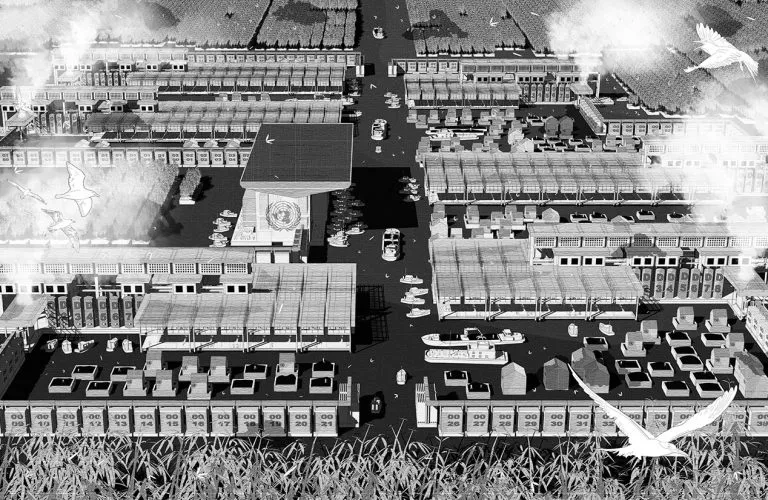
Seventeen self-sufficient districts formed the city’s backbone, each aligned with a UN branch. These floating communities tested sustainable living models such as:
- Growing food and harvesting water on water-based platforms
- Creating renewable energy from sun, wind, and tide
- Building adaptable neighbourhoods that expand as sea levels rise
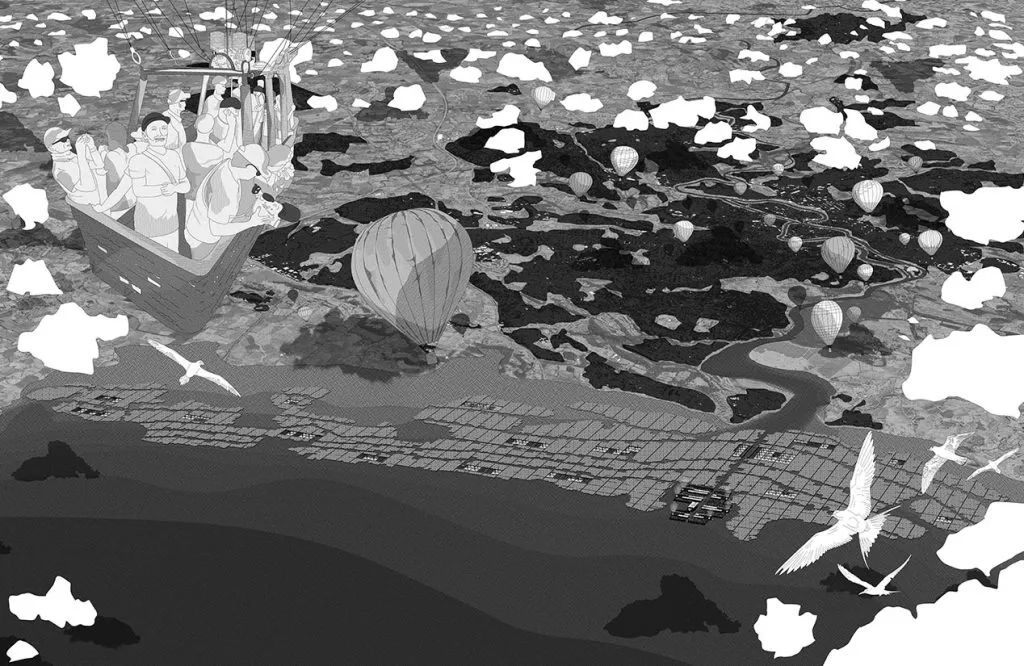
From above — especially during Bristol’s Balloon Fiesta — the vision became clear: not just isolated rafts, but a whole new geography of floating urbanism.
-
- Sea Rise City 11
-
- Sea Rise City 10
Lessons for the Future
While speculative, this project highlights an important idea: resilience comes from adaptability. Floating cities can expand, shift, and evolve as conditions change. Communities can live with climate change, not just in spite of it.
For Folly Architects, Sea Rise City remains both a provocation and an inspiration — a reminder that imaginative design can spark new ways of thinking about the future of architecture, sustainability, and life with water.
Frequently Asked Questions about Sea Rise City
Q: What is Sea Rise City?
A: Sea Rise City was a past student project exploring how architecture and urban design could respond to the challenge of rising sea levels. It imagined Bristol as a floating city built on sustainable, adaptable platforms.
Q: Why focus on floating cities?
A: Floating cities represent a radical but practical response to climate change. Instead of resisting floods and sea level rise, they embrace water as a resource — providing adaptable, resilient, and sustainable ways of living.
Q: How does Sea Rise City connect to real-world architecture?
A: Although speculative, the project highlights principles that are relevant today: circular systems, renewable energy, water management, and community resilience. These ideas are increasingly influencing real-world architectural responses to climate change.
Q: What role did Folly Architects have in Sea Rise City?
Q: Sea Rise City was completed as a past student project, but its lessons continue to inspire Folly Architects’ approach. We remain committed to sustainable design and future-focused thinking in our current architectural work.
If you'd like to know more feel free to email us!